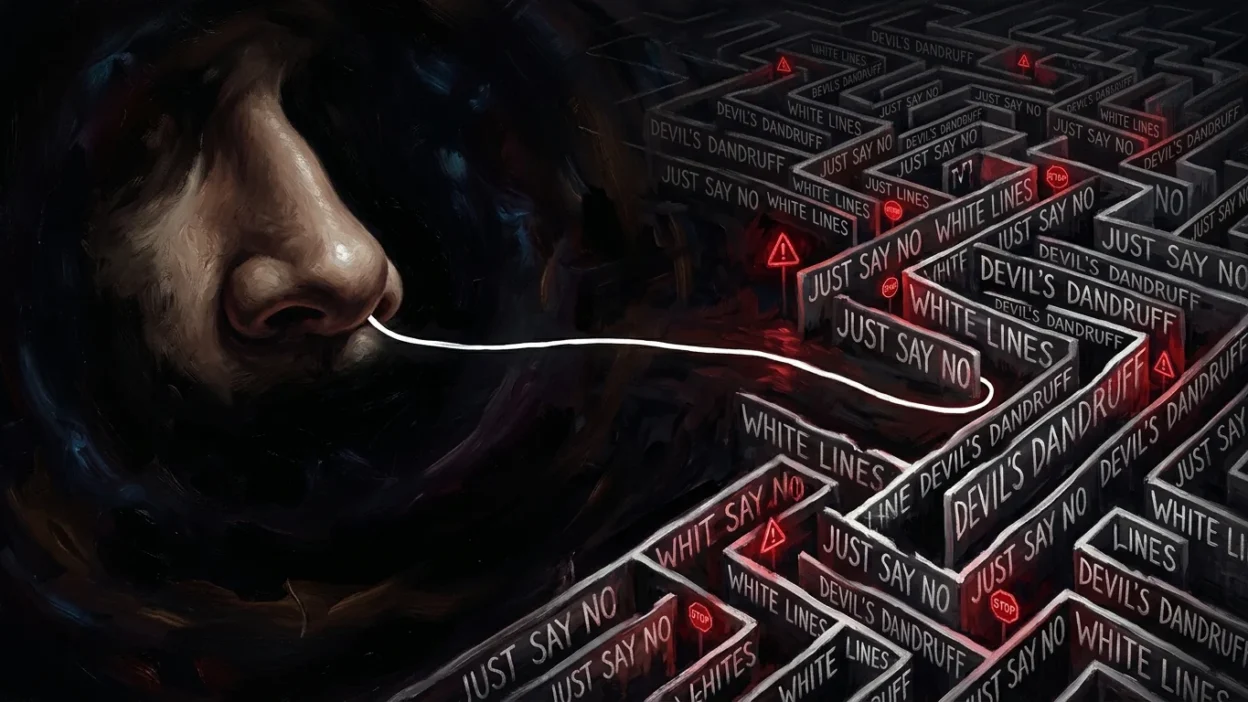
Cocaine slogans have evolved dramatically over the decades, shifting from early 20th-century medical marketing to potent anti-drug campaigns, and eventually finding their way into music and modern meme culture.
The phrase itself encapsulates a broad spectrum of messaging—from “Just Say No” to controversial rap lyrics. This article explores the various categories of cocaine slogans, their origins, and their impact on society.
What Is a Cocaine Slogan?
A cocaine slogan is typically a short, memorable phrase used to promote, discourage, or describe the use of cocaine. These slogans serve multiple purposes: public health warnings, brand marketing (historically), lyrical expressions in art, or even personal mottos associated with the drug’s lifestyle.
The evolution of this terminology is significant. In the late 19th and early 20th centuries, cocaine was legally marketed, leading to slogans like “Soldiers’ cocaine” for physical endurance . However, as the dangers became apparent, the focus shifted dramatically. Today, the term most commonly refers to anti-drug public service announcements (PSAs), such as the iconic “This is your brain on drugs” campaign . Understanding this dual history is key to grasping the full context of the keyword.
Anti-Drug Awareness Slogans
These messages are designed to educate the public about the severe risks associated with cocaine use and to promote healthy, drug-free lifestyles. They often rely on shock value or simple, direct commands.
- “Cocaine: It only costs you everything.” – Highlights the comprehensive loss associated with addiction.
- “Don’t Let Cocaine Take Control.” – A direct warning about the addictive nature of the substance.
- “Your Brain on Drugs.” – A fragment of the famous PSA campaign featuring a fried egg .
- “Say No to Nose Candy.” – Uses a slang term to make the warning more relatable.
- “Just Say No.” – The hallmark slogan from the Reagan-era war on drugs .
- “One Line Can Lead to a Lifetime of Regret.” – Emphasizes the long-term consequences of a single use.
- “Keep Your Life, Lose the Blow.” – A play on the slang term “blow” for cocaine.
- “Cocaine Stops Here.” – Empowers individuals to break the cycle of addiction.
- “Think Before You Snort.” – Encourages mindfulness before using the drug.
- “Addiction is Expensive; Recovery is Priceless.” – Contrasts the cost of addiction with the value of health.
- “Clean is Better.” – A simple, positive affirmation.
- “Don’t Let Snow Blind You.” – Refers to the slang “snow” to warn against its deceptive appeal.
- “Be a Hero, Not a User.” – Appeals to a sense of personal honor.
- “Protect Your Nose, Save Your Soul.” – A visceral warning about physical damage.
- “The High Isn’t Worth the Low.” – Captures the emotional crash that follows cocaine use.
- “Choose Freedom Over Dependence.” – Emphasizes the loss of autonomy.
- “Cocaine Kills Dreams.” – A short, impactful statement.
- “Be the One Who Walked Away.” – Frames quitting as a positive, powerful choice.
Historical & Early Medical Slogans
Before the dangers were fully known, cocaine was marketed as a wonder drug and a key ingredient in tonics. These slogans offer a fascinating look into past marketing tactics.
- “The Invigorator for the Tired Brain.” – Marketed as a mental stimulant.
- “For the Exhausted Body and Mind.” – Sold to athletes and laborers .
- “The Confidence Builder.” – Claimed to boost self-esteem.
- “Cocaine Toothache Drops.” – Marketed for children’s teething pain in the 1880s .
- “Instantaneous Cure!” – A common claim for the drug’s medicinal properties.
- “The Fatigue Fighter.” – Promoted to increase physical endurance.
- “A Substitute for Food.” – Claimed to suppress appetite.
- “The Soldier’s Cocaine.” – Used historically to boost troop morale in the 19th century .
- “The Original Energy Drink.” – A retroactive comparison to modern energy drinks.
- “Deliciously Flavored Cordials.” – Sold as a tasty tonic.
- “For Hay Fever and Asthma.” – Legitimate medical uses prescribed by physicians like Freud .
- “The Stimulant of Choice for Scholars.” – Used by thinkers like Freud for intellectual work .
- “Coca Wine, the Nourisher.” – A product mixing wine and cocaine .
- “Therapeutic and Non-Habit Forming.” – A tragically incorrect claim.
- “Adds Sparkle to Daily Life.” – Marketed as a general mood enhancer.
- “For the Overworked Professional.” – Targeted at the stressed upper class.
- “The Victorian Pick-Me-Up.” – A hidden vice in the 19th century.
Glamorized Drug Culture Slogans
Often propagated by media and music, these slogans glamorize the cocaine lifestyle, associating it with wealth, success, and hedonism.
- “Snow White Lies.” – A play on the drug’s purity and the deceptiveness of the lifestyle.
- “The Fast Life.” – Associating the drug with speed and high society.
- “White Lines, Black Mirrors.” – A reference to the song “White Lines” and the emptiness of addiction.
- “Cocaine is a Hell of a Drug.” – A famous quote by Rick James .
- “She’s a Rich Girl.” – A lyric often associated with the drug and wealth.
- “The Miami Vice Vibe.” – Evokes the 1980s glamour associated with the drug trade .
- “Powder in the Air.” – Suggests a party atmosphere.
- “The Champagne of Drugs.” – Links the drug to luxury.
- “Living on the Edge.” – Romanticizes the danger.
- “Blow and Glow.” – A rhyme highlighting the drug’s supposed enhancement of beauty.
- “Booger Sugar Rush.” – A playful, yet problematic, slang reference.
- “The Status Symbol.” – Reflects the high cost of the drug.
- “Dancing with the Devil.” – Acknowledges the danger while romanticizing it.
- “White Girl Energy.” – A modern slang term for the effect of the drug.
- “Luxury, Leisure, and Lines.” – Alliteration linking the drug to an elite lifestyle.
- “The 80s Dream.” – Iconic to the Wall Street, cocaine-fueled era.
- “Money, Powder, and Power.” – The unholy trinity of the cartel stereotype.
- “Snow on the Beach.” – A reference to a popular song lyric.
- “The High Life.” – A classic phrase used in drug culture.
Pop Culture Lyrics & Music Slogans
Music, particularly hip-hop and rock, has popularized cocaine in its lyrics. These lines often serve as de facto slogans for fans.
- “I’m on the High Way to Hell.” – A lyric from AC/DC, often associated with drug use.
- “White Lines (Don’t Do It).” – A seminal song that warns against the drug .
- “Cocaine is the Devil.” – A common refrain in various songs.
- “I Love Cocaine.” – A blunt, controversial statement in some genres.
- “Powder in the Wind.” – The lyrical theme of fleeting pleasure.
- “The Nose Knows.” – A popular rhyme in hip-hop.
- “Fuel for the Rockstar.” – The stereotypical energy source for musicians.
- “Snowflakes and Money.” – Lyrical content about wealth and drug use.
- “She’s My Cocaine.” – Using the drug as a metaphor for a love interest.
- “Devil’s Dandruff.” – A popular hip-hop nickname for the drug.
- “Perico, Duro, and Flow.” – Spanish slang often featured in reggaeton.
- “Baking Soda and a Pot.” – Reference to the process of turning powder into crack .
- “Skiing in the Winter.” – A euphemism popularized in songs.
- “My White Queen.” – Romanticizing the drug as a female figure.
- “The Sound of the 80s.” – Associating the drug’s sound with that era’s music.
- “Cash Rules Everything Around Me (C.R.E.A.M.).” – A Wu-Tang lyric linked to the drug trade.
- “Blow the Whistle.” – A double entendre popular in hip-hop.
- “Colombian Gold.” – A specific reference to the drug’s origin in songs.
Cartel & Street Slang Slogans
These phrases are used within the drug trade and by users to communicate covertly about cocaine.
- “Snow is Falling.” – A signal that cocaine is available.
- “The Girl is Here.” – “Girl” is a common slang term for cocaine.
- “Got the Blow?” – A direct question regarding possession.
- “Percolating the Pot.” – A reference to the cooking process .
- “Booger Sugar for Sale.” – A call-out for customers.
- “Yayo, Yayo.” – Spanish slang for cocaine.
- “White Powder in a Bag.” – A generic, descriptive phrase.
- “Para la Nariz.” – Spanish for “for the nose.”
- “Tusi, Tusi.” – A modern slang term for a pink cocaine mixture.
- “The Devil’s Breath.” – A dramatic nickname.
- “Shake and Bake.” – A term for a method of production.
- “The White.” – A shortened, simple name.
- “Get the Party Started.” – A code for beginning a session.
- “Where the Cash At?” – Often heard in transactions.
- “Tony Montana’s Special.” – A reference to Scarface .
- “Pure as the Driven Snow.” – A promise of high quality.
- “Fish Scale.” – A term for high-purity cocaine.
- “The Long White Line.” – An iconic visual associated with the drug.
Harm Reduction & Recovery Slogans
These are used in rehabilitation centers and support groups to help individuals maintain sobriety and understand the risks.
- “One Day at a Time.” – The classic recovery mantra .
- “You Are Not Alone.” – A message of community and support.
- “Cocaine Doesn’t Love You Back.” – A personification of the drug as an abusive partner.
- “It’s Not About Willpower.” – Reduces stigma around addiction.
- “Recovery is Possible.” – A message of hope.
- “Stay Clean, Stay Green.” – Emphasizes the renewal that comes with sobriety.
- “Put Down the Pipe.” – A direct call to action for crack users.
- “Seek Help, Find Life.” – Encourages professional intervention.
- “Pause Before You Snort.” – Encourages mindfulness.
- “Protect Your Health.” – Broad advice against use.
- “Don’t Let Cocaine Steal Your Soul.” – Emphasizes the spiritual cost.
- “From Addiction to Action.” – Shifting the focus to recovery.
- “Chase Life, Not a High.” – Replacing the drug with a positive goal.
- “Break the Cycle.” – A common recovery phrase.
- “Sober is Sexy.” – Modern positivity about sobriety.
- “Just Keep Going.” – Encouragement for tough days.
- “Recovery Starts with You.” – Personal empowerment.
- “Peace Over Powder.” – A simple preference for tranquility.
Movie & TV Show Quotes
Film and television have produced iconic lines that contribute to the cultural perception of cocaine.
- “Say hello to my little friend!” – Scarface, often parodied in drug contexts .
- “We’re going to need a bigger boat.” – Often quoted jokingly in relation to large quantities.
- “That’s a lot of cocaine.” – A common reaction line in movies.
- “The world is yours.” – Scarface tagline .
- “You can’t be late for your own funeral.” – A quote from a scene involving drug use.
- “Cocaine is God’s way of telling you you have too much money.” – A humorous quote from Robin Williams.
- “I was a wealthy banker with a cocaine habit.” – A character trope in dramas.
- “This is my gift to the world.” – A dealer’s justification in film.
- “The powder burns.” – A line about the manufacturing process.
- “Don’t get high on your own supply.” – A rule famously broken in movies.
- “It’s a hell of a drug.” – A famous quote by Rick James .
- “It’s not a party without the powder.” – A cliché movie line.
- “To the pain!” – A quote from The Princess Bride used ironically.
- “The white whale.” – A literary reference used in crime dramas.
- “Just a little bit for the road.” – A line about taking a sample.
- “She’s a bad, bad girl.” – Referring to the personification of the drug.
- “Whatever happens in the 80s stays in the 80s.” – A phrase used in retrospective shows.
Marketing vs. Reality
These slogans highlight the contrast between the marketed allure of cocaine and the harsh truth of addiction.
- “From Glamour to Gutter.” – Captures the descent.
- “The Ad Said Energy, the Reality Says Jail.” – Contrasts marketing with consequences.
- “Don’t Buy the Hype.” – A warning against advertising.
- “It’s Not All Glitz and Glam.” – Debunking the media image.
- “The Commercial Lies.” – A blunt assessment.
- “Medicine to Menace.” – The transition from medical use to illegal drug.
- “The Pitch: High; The Reality: Low.” – A play on the physical experience.
- “Sold as a Cure, Bought as a Curse.” – The irony of the drug’s history.
- “The Promotion Fades, the Addiction Remains.” – The lasting effect.
- “The Ad Was White, the Future is Dark.” – Playing on the color imagery.
- “Performance Enhancer to Relationship Destroyer.” – The social cost.
- “From Sales Pitch to Sentencing.” – The legal consequences.
- “The Fine Print: Addiction.” – Reading the hidden terms.
- “The Law Forbids What Ads Once Boasted.” – The legal change.
- “The Marketing Blur is Gone.” – Clarity on the reality.
- “Consumer to Convict.” – The trajectory of a user.
- “The Discount Today Costs Everything Tomorrow.” – Forward-looking warning.
Social Media & Meme Slogans
In the digital age, cocaine has become a subject of memes and short-form video content, often trivializing its use through humor.
- “My Therapist Said Cocaine is a Bad Idea.” – A relatable meme format.
- “A Little Bit of the Old Booger Sugar.” – A humorous, euphemistic phrase.
- “When the Blow Hits.” – A reaction meme.
- “30 Minutes of Confidence in a Bag.” – A satirical take on the effects.
- “Just a Pick-Me-Up.” – Trivializing the use.
- “My Fave White Girl.” – A problematic but common meme phrasing.
- “I’m in my Cocaine Era.” – Relating it to a pop culture phase.
- “The Devil’s Dandruff is Flaking.” – A darkly humorous phrase.
- “Cocaine and Caviar.” – The ultimate status meme.
- “It’s 5 o’clock Somewhere (And I Need a Line).” – A joke about time.
- “I Need a Vacation… in Miami.” – Referencing the 80s party scene.
- “Baking Soda Science.” – A meme about cooking crack.
- “Snow Day!” – A double meaning meme.
- “The Nose Didn’t Know.” – A funny take on the physical damage.
- “Mood: White Powder Energy.” – Relating feelings to the drug.
- “The Economy Runs on Yayo.” – Exaggerating its importance.
How to Create Your Own Cocaine Slogan
Developing a catchy or impactful slogan requires understanding your audience and the message you want to convey. Here are four tips to guide the creative process.
- Understand Your Purpose: Determine if you are creating an anti-drug warning, a piece of art, or a memorable line for a project. The tone will vary drastically .
- Use Rhyme and Rhythm: Slogans stick in the mind through sonic appeal. Short, punchy phrases with a rhythm (e.g., “Just Say No”) are often the most memorable .
- Incorporate Metaphors: Compare the drug to something else (e.g., “Devil’s Dandruff” or “The White Horse”) to create a visual or emotional impact.
- Keep It Simple: The most effective slogans are the easiest to remember. Short words and direct messages are key to a quick understanding.
Frequently Asked Questions
What is the most famous cocaine slogan?
The most famous anti-cocaine slogan is likely “Just Say No,” popularized by Nancy Reagan . On the music side, “White Lines (Don’t Do It)” is also incredibly iconic .
Are there slogans that promote cocaine?
While there are no official public health slogans that promote cocaine, many pop culture phrases and slang terms glamorize its use (e.g., “The Fast Life,” “Snow White Lies”).
How has the “cocaine slogan” changed over time?
It has shifted from early medical marketing (e.g., “The Invigorator”) to the hard-hitting PSAs of the 1980s (“This is your brain on drugs”), and has now evolved into often ironic or humorous meme culture .
What is the “This is your brain on drugs” slogan?
It was a prominent anti-drug campaign in the 1980s that featured an egg being fried in a pan to represent the damaging effects of drugs on the brain .
What are common slang terms used in cocaine slogans?
Common slang includes “snow,” “blow,” “yayo,” “the white girl,” “booger sugar,” and “devil’s dandruff.” These are often used to discuss the drug covertly or in music .
Are there slogans aimed at preventing cocaine use?
Yes, there are many, such as “Cocaine: It only costs you everything,” “Don’t Let Cocaine Take Control,” and “Think Before You Snort.”
What should a good anti-cocaine slogan do?
It should either accurately depict the serious physical and mental consequences of addiction or provide a positive alternative to drug use, promoting sobriety and health.
The evolution of cocaine slogans reflects a complex societal journey from ignorance to awareness, and from celebration to stigmatization. While early marketing painted a picture of harmless energy, modern realities—and modern slogans—aim to highlight the devastating consequences of addiction. Understanding the context behind these catchy phrases is crucial for navigating the conversation about drugs today.