
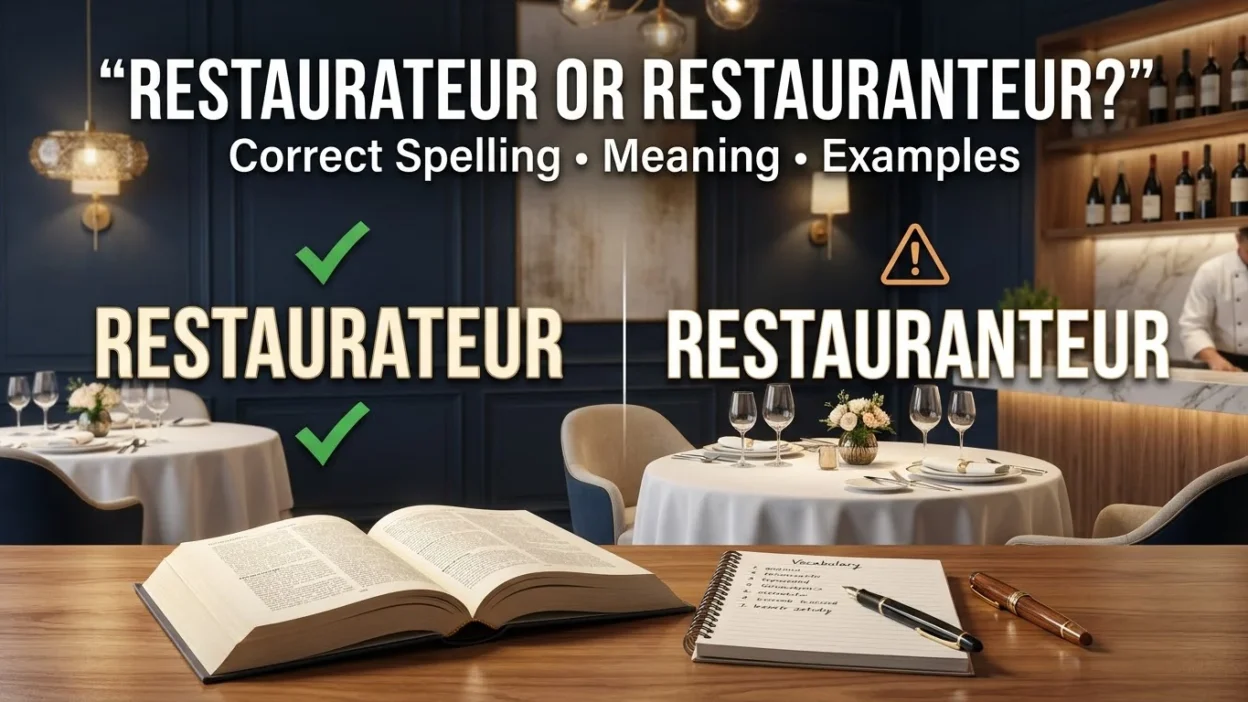
Choosing between restaurateur or restauranteur can be confusing because both spellings appear in writing, online searches, and everyday conversations. If you are writing an article, preparing a business document, or learning English, knowing which form is preferred will help you communicate more clearly.
The word restaurateur refers to a person who owns, manages, or operates a restaurant. The spelling restauranteur is also used, mainly because people naturally associate the word with restaurant. However, restaurateur is the traditional and generally preferred spelling in standard English. Although restauranteur is widely understood, many dictionaries and formal writing guides favor the shorter form without the extra “n.” Understanding the difference is useful for students, writers, restaurant professionals, and anyone who wants to use the correct word in professional communication.
Quick Answer
Restaurateur is the traditional and preferred spelling for someone who owns or operates a restaurant. Restauranteur is a common variant influenced by the word restaurant. Both forms are generally understood, but restaurateur is the safer choice for formal writing, professional documents, and polished English.
Why Do People Confuse Restaurateur and Restauranteur?
The confusion mainly comes from the spelling of the word restaurant. People often assume that someone who owns a restaurant should be called a restauranteur, with the complete word restaurant appearing inside the longer term.
However, restaurateur comes from the French word restaurateur, meaning someone who restores or provides food. The word entered English through French and became associated with people who establish and run restaurants.
Because restauranteur looks more closely related to the familiar English word restaurant, it seems logical to many writers. This explains why the alternative spelling has become common.
The key distinction is not pronunciation or meaning. It is the preferred spelling in standard usage.
First Word: Restaurateur
Restaurateur is the traditional spelling of the noun describing a person who owns, operates, or manages a restaurant business.
It comes from French and is associated with the development of restaurants as places where people could purchase prepared meals. In modern English, the term can describe an independent restaurant owner, a fine-dining entrepreneur, or someone who operates several dining establishments.
Meaning of Restaurateur
A restaurateur is a person involved in establishing or running a restaurant business. The person may be responsible for the menu, staff, customer experience, finances, business strategy, or overall operation.
Examples:
- She became a successful restaurateur after opening her first Italian restaurant.
- The experienced restaurateur launched a new fine-dining concept.
- He is a respected restaurateur known for his creative menus.
- The restaurateur hired a professional chef to lead the kitchen.
Is Restaurateur the Correct Spelling?
Yes. Restaurateur is the traditional and generally preferred spelling in standard English. It is especially appropriate for formal articles, business profiles, biographies, academic writing, and professional communication.
Remember that the word does not contain the letter “n” after “restaura.”
Second Word: Restauranteur
Restauranteur is a variant spelling of restaurateur. It is used by many English speakers because it resembles the word restaurant.
Although the spelling is common and widely understood, it is generally considered less traditional than restaurateur. Some readers may regard it as a misspelling, particularly in formal or edited writing.
Meaning of Restauranteur
When someone uses restauranteur, they generally mean exactly the same thing as restaurateur: a person who owns, operates, or manages a restaurant.
Examples:
- The restauranteur opened a new café in the city.
- She is a successful restauranteur with several popular locations.
- The local restauranteur supports community food programs.
- He hopes to become a restauranteur after gaining experience in hospitality.
These sentences communicate the intended meaning, but using restaurateur is usually the better choice when you want to follow traditional spelling conventions.
Is Restauranteur Wrong?
Calling restauranteur simply incomprehensible or universally incorrect would be too strong. It is an established variant that readers generally recognize.
Nevertheless, if you want the traditional spelling favored in standard dictionaries and formal editorial usage, choose restaurateur.
Restaurateur vs. Restauranteur: Comparison Table
| Feature | Restaurateur | Restauranteur |
|---|---|---|
| Meaning | Restaurant owner or operator | Restaurant owner or operator |
| Spelling status | Traditional and preferred | Common variant |
| Extra letter “n” | No | Yes |
| Formal writing | Recommended | Usually avoid when following traditional usage |
| General understanding | Widely understood | Widely understood |
| Best choice for professional writing | Yes | Generally not preferred |
The main difference is spelling preference, not meaning. Both words generally refer to the same occupation.
When to Use Each Word
Choosing between these spellings depends on your writing purpose and the style you want to follow.
1. Use Restaurateur in Formal Writing
Choose restaurateur for business reports, newspaper articles, professional biographies, academic assignments, and restaurant-industry publications.
Example: The award-winning restaurateur expanded her business into three neighboring cities.
This spelling is the safest option when accuracy and traditional usage matter.
2. Use Restaurateur in Professional Profiles
If you are describing a restaurant owner on a website, résumé, business directory, or professional social media profile, restaurateur is a polished choice.
Example: Daniel is a restaurateur specializing in contemporary Mediterranean cuisine.
3. Recognize Restauranteur When Reading
You may encounter restauranteur in blogs, advertisements, interviews, and informal writing. Understanding it will help you recognize the intended meaning without confusion.
Example: The restauranteur discussed plans to open another location.
The word is understandable, even though the traditional spelling is generally preferred.
4. Follow Your Publication’s Style Guide
Some publications may permit common variants, while others follow stricter dictionary or editorial conventions. If you are writing for a newspaper, magazine, educational institution, or business, follow its preferred reference guide.
When no specific guidance is available, use restaurateur.
Examples of Restaurateur and Restauranteur in Sentences
The following examples show how the two spellings work in everyday and professional contexts.
Examples Using Restaurateur
- The restaurateur opened a modern seafood restaurant near the harbor.
- She became a well-known restaurateur after years of hard work.
- The young restaurateur introduced a menu inspired by local ingredients.
- An experienced restaurateur understands the importance of customer service.
- The restaurateur hired additional staff before the holiday season.
- My uncle is a restaurateur who specializes in traditional Italian food.
- The successful restaurateur received an award for his contribution to the hospitality industry.
- Every aspiring restaurateur should learn about budgeting and business management.
- The restaurateur collaborated with a famous chef to develop a new menu.
- The documentary follows the life of a restaurateur building a family business.
- A local restaurateur donated meals to families in need.
- The restaurateur plans to expand the business into other cities.
Examples Using Restauranteur
- The restauranteur opened a small restaurant in the town center.
- The restauranteur discussed new trends in the food industry.
- She hopes to become a successful restauranteur someday.
- The restauranteur introduced affordable meals for students.
- An ambitious restauranteur must balance quality and profitability.
- The restauranteur welcomed guests during the restaurant’s grand opening.
- A famous restauranteur shared advice with young business owners.
- The restauranteur invested in better kitchen equipment.
These examples illustrate the same general meaning. However, for consistent formal writing, you can replace restauranteur with restaurateur.
Common Mistakes to Avoid
Understanding the preferred spelling is easier when you recognize the mistakes writers commonly make.
Mistake 1: Adding an Extra “N”
Incorrect or less preferred in traditional usage: She is a talented restauranteur.
Preferred: She is a talented restaurateur.
The extra “n” is the main spelling difference.
Mistake 2: Thinking the Words Have Different Meanings
Both terms generally describe a person who owns or operates a restaurant. The distinction is primarily conventional spelling, not a difference in occupation.
Mistake 3: Confusing a Restaurateur With a Chef
A chef prepares food and often supervises kitchen operations. A restaurateur owns or operates the restaurant business. One person can perform both roles, but the terms are not interchangeable in every situation.
Example: The restaurateur hired a chef to create the restaurant’s menu.
Mistake 4: Assuming Every Common Spelling Is Preferred
A spelling may be widely used without being the best choice for formal writing. When you need a polished result, consult a reliable dictionary and follow established editorial conventions.
Mistake 5: Using Restaurateur Only for Fine-Dining Owners
The word is not limited to luxury restaurants. It can describe someone who operates a casual restaurant, family dining business, café-based restaurant, or larger restaurant group.
Memory Trick: How to Remember Restaurateur
Use this simple memory trick:
Restaurateur = restaurant owner, without the extra “n.”
Think of restaurateur as the traditional form you should remember for exams, essays, and professional writing.
You can also use this sentence:
“A restaurateur runs a restaurant.”
Both words begin with “restaura,” making the connection easy to remember.
If you are ever uncertain, choose restaurateur. It is the safer traditional spelling.
American vs. British English
The spelling preference is not primarily an American-versus-British distinction.
In both American and British English, restaurateur is the traditional spelling and a suitable choice for formal writing. The variant restauranteur also appears in English-language publications and general usage.
| Variety | Preferred traditional form | Variant encountered |
|---|---|---|
| American English | Restaurateur | Restauranteur |
| British English | Restaurateur | Restauranteur |
| International English | Restaurateur | Restauranteur |
Unlike pairs such as color/colour or organize/organise, this is not a standard regional spelling difference. Writers should generally choose restaurateur regardless of whether they are using American or British English.
Similar Words You Should Know
Several related terms describe different roles in the restaurant and hospitality industry.
Restaurant Owner
A restaurant owner is someone who legally owns all or part of a restaurant business. This is a straightforward term that emphasizes ownership.
Example: The restaurant owner invested in a new dining room.
Restaurant Manager
A restaurant manager oversees daily operations, staff schedules, customer service, and other administrative responsibilities. A manager may work for the owner rather than own the business.
Example: The restaurant manager organized the staff training session.
Chef
A chef is a trained professional who prepares food and may supervise kitchen staff, plan menus, and manage food quality.
Example: The chef introduced a seasonal menu.
Food Entrepreneur
A food entrepreneur starts or develops a business related to food. This could include a restaurant, catering company, food truck, or packaged-food brand.
Example: The food entrepreneur launched a restaurant focused on regional cuisine.
Hospitality Professional
A hospitality professional works in an industry that serves guests and customers, including restaurants, hotels, catering, and event services.
Example: The hospitality professional helped improve the guest experience.
Although these terms are related, restaurateur specifically emphasizes a person’s role in owning or operating a restaurant business.
Final Verdict: Restaurateur or Restauranteur?
Restaurateur is the preferred traditional spelling. It refers to someone who owns, manages, or operates a restaurant. The alternative restauranteur is also commonly encountered and generally understood, but it is less traditional and may be considered incorrect by some editors.
For essays, professional documents, business profiles, and formal articles, choose restaurateur. You do not need to worry about a different meaning or pronunciation because the two forms generally communicate the same idea.
The simplest rule is to remember the preferred spelling without the extra “n.”
Frequently Asked Questions
1. Is it restaurateur or restauranteur?
Restaurateur is the traditional and generally preferred spelling. Restauranteur is a common variant that is also understood by many English speakers.
2. What does restaurateur mean?
A restaurateur is someone who owns, operates, or manages a restaurant business. The person may oversee finances, staffing, menus, customer service, and business development.
3. Is restauranteur a real word?
Yes. Restauranteur is an established variant spelling used in English. However, restaurateur is the more traditional and generally preferred form.
4. Why is restaurateur spelled without an “n”?
The word comes from French restaurateur, rather than being formed by simply adding a suffix to the English word restaurant. This historical origin explains why the traditional spelling lacks the extra “n.”
5. How do you pronounce restaurateur?
In English, it is commonly pronounced approximately RES-tuh-ruh-TUR. Pronunciation varies somewhat by accent, and the word is often given a French-influenced pronunciation.
6. Is a restaurateur the same as a chef?
No. A chef specializes in preparing food and often managing kitchen operations. A restaurateur owns or operates the restaurant business. A person can be both a chef and a restaurateur.
7. Should I use restaurateur in a résumé or business article?
Yes. Restaurateur is the recommended choice for résumés, business articles, professional biographies, and other formal documents because it follows traditional spelling conventions.
Remember This
- Restaurateur: The traditional and preferred spelling.
- Restauranteur: A common spelling variant.
- Meaning: Both generally refer to a person who owns or operates a restaurant.
- Best writing tip: Use restaurateur in formal and professional writing.
Conclusion
The difference between restaurateur and restauranteur is mainly a matter of spelling preference. Although both forms appear in English, restaurateur is the traditional form and the safest choice for formal writing. Learning this spelling will help you write more confidently in academic, business, and everyday contexts.
Whenever you need to describe someone who owns or operates a restaurant, remember the simple rule: write restaurateur without the extra “n.” This small detail can make your writing clearer and more polished.

Evelyn Mia is a creative content writer and slogan enthusiast at SloganIdea. She specializes in crafting memorable slogans, catchy taglines, and branding ideas, helping businesses, students, and creators communicate effectively.